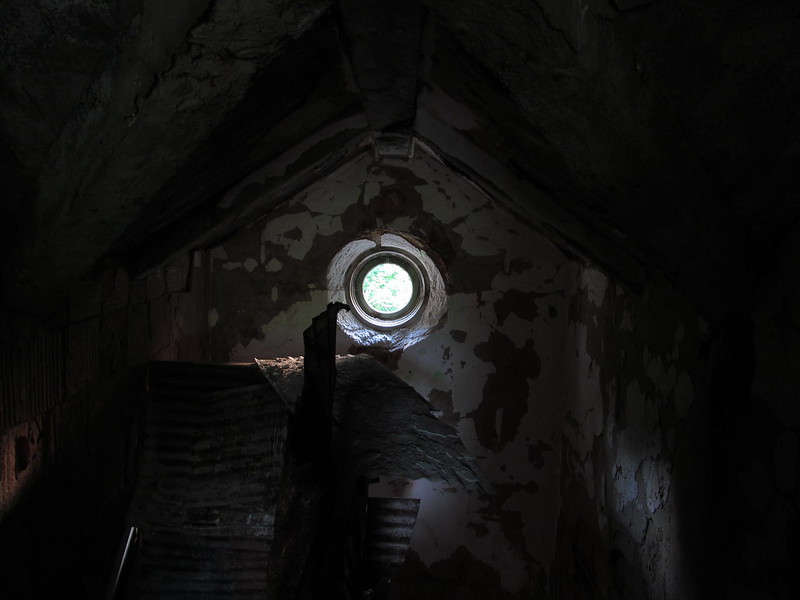
Friday, February 8, 2013

The Gowanus Batcave

Oh, Gowanus Batcave, squatter's dream, sour taste of rusted metal lingering on my tongue!


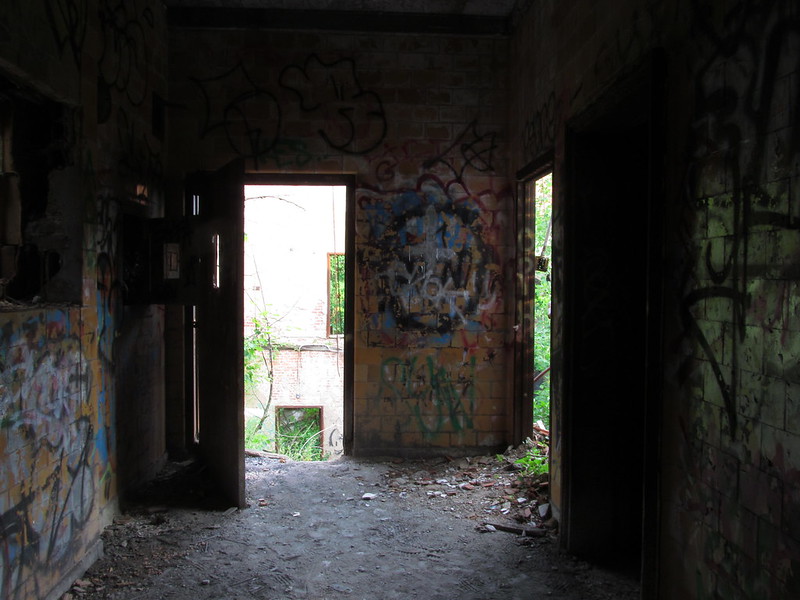
Cleared of your messy remnants which have been littered, strewn across the ground, the workers have not yet peeled off your layers of dirt, grime, graffiti and history.


Looming in the distance, massive, visible from the bridge, inviting, beckoning, tempting.


     My first explore of the New Year, once my bronchitis finally cleared up, was the Gowanus Batcave. My partner and I stared at it from across the canal when we noticed a group of teenagers on the other side of the bridge, eyes fixed on the same prize. I rushed to them and slid a cautious leg over the silver spikes of the fence, telling them, "same idea." With a relieved laugh, they followed, and we wrapped ourselves around another fence lined with razor wire.


We spent a good while circling the building searching for an entry before finally giving in and constructing our own. Though we didn't know each other, we both had the same goal in mind. This is what led to our most sketchy entry point ever. We began stacking heavy concrete blocks (it took two people to lift one of those gray blocks), and using these blocks as a boost, climbed up a utility cable hanging out of the side of the second floor window.


After this, we found a rope and tied it around the windowsill (which was surprisingly sturdy for a building that had been abandoned for so long), knotted it, and climbed up and in.


The Batcave is also known by a less alluring (and more official) name: The Rapid Transit Central Power House. This property used to power trains. By its current state, being completely cleared out and under renovation, I couldn't discern its original purpose. Back in the day, its boilers burned coal to provide power to trains, however, when this technology became outdated the plant became abandoned.


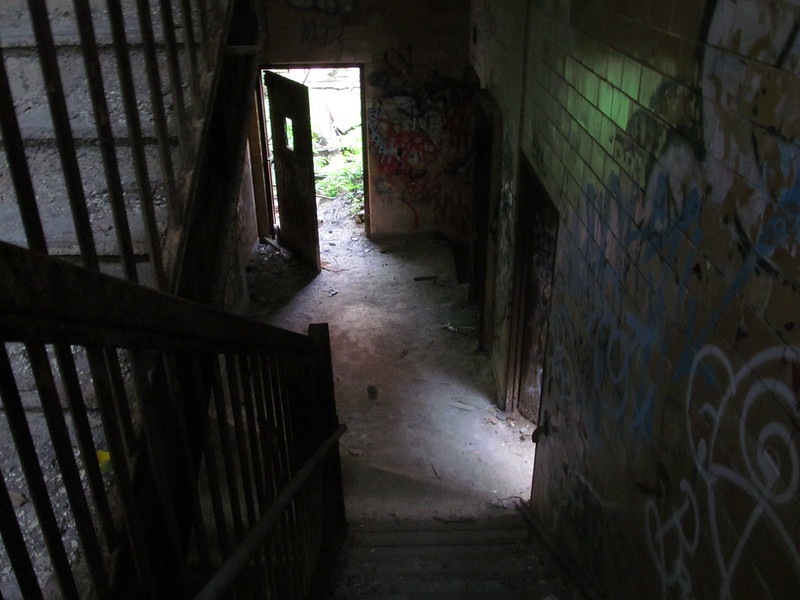
During a period of time in the early 2000s, a slew of squatters claimed their residence in this space, and hypodermic needles had piled up until the squatters were kicked out in 2006. Previous intrusions by others revealed random scraps of litter which would inform visitors that this was a person's hideout; now it is being emptied, replaced with cinderblocks, steel pillars and electrical wires.


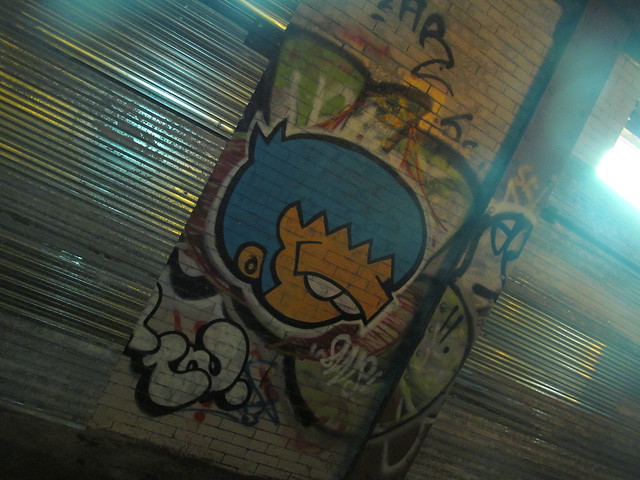


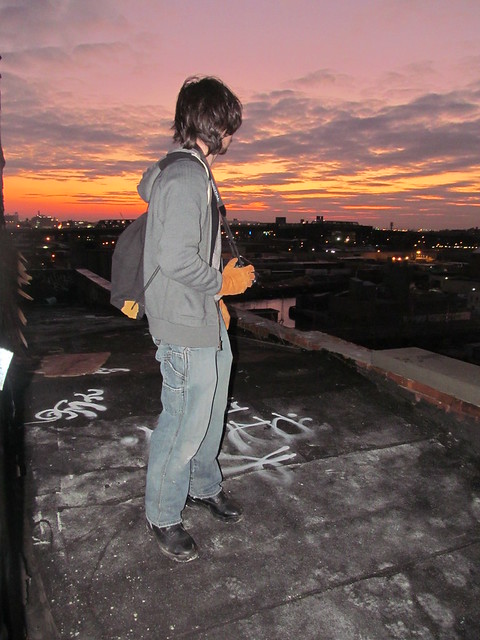


     Once people knew this site was open, hipsters and residents alike flocked to it instantly, and word spread overwhelmingly quickly. I must have seen at least five other people come along during our visit, but I have great doubts that our original entry method is still present. After enjoying a purple-grapefruit drenched sunset from the rooftop, my partner and I parted ways.

Wednesday, February 6, 2013

Light Painting in Queens Sewer

     I took many hikes by Astoria's waterfront last fall so that I could locate a certain brick-arched sewer. This particular sewer lets in the Hell Gate waters which, at low tide, stays dry for a while; however, once the tide rises the choppy stream begins to fill the sewer pretty quickly. Despite Steve Duncan probing past sealed iron blocks, which looked as thick as the locks protecting a bank vault, my group and I were absolutely stumped as to how to make our way into the deep sewer by any means other than a blowtorch.


    Upon entering the outfall, we saw several musicians singing and playing instruments at the mouth of the cave (presumably because the sewer has interesting acoustics), and other explorers who we waved to, grateful that we weren't the EPA. Unable to venture further than about 100 feet into the tunnel, we did the only thing we could in this dark environment... Light Painting!


This homage to Pink Floyd took 3 people to "paint."


Wednesday, January 30, 2013

Kissena Park Drains

     Question: How do you carry a crowbar into the busiest station of one of the busiest cities in the world?
     Answer: Very Stealthily

     Not much coverage has hit the Kissena park drains in the past few years other than three teenagers going down there and getting stuck (they were charged with criminal trespass), and a girl falling 15 feet down an open manhole. I was nearly certain the latter event eradicated any possible access to this site. The area surrounding the manholes had bits of construction and yellow tape, which I assumed explorers must use as barricades around the open manholes,  However, even though my experience with storm drains revealed that they can be boring, the prospect of an underground river excited me. When I visited the park during the day, I could hear the waters rushing underground, tempting me to come down.
   

Flash forward and it is 9PM in Queens. My companion is using his full force to bend the manhole lid upward. Unfortunately, it is much heavier than we assumed it to be. To make some fine adjustments to the angling of the manhole cover, he uses his fingers, and tells me,
"If this manhole drops on me, I need you to cut off my fingers."
"Don't say things like that!" I cried out in shock, mentally envisioning his detached extremities.
"I'm being serious," he responded, and carried on his work, only to have our manhole, which we worked so hard to bend, fall back into place, almost snapping onto his fingers but missing by barely a second.


My exploring partner managed to conceal his crowbar in Times Square station by hooking it around his shoulders, and it blended in with his coat. We took to the park together, located the only unobstructed manhole, and opened it. During our fifteen minutes of prying into the manhole, a man came by, walking his dog. 


"I love this city," I said with a laugh because the man walked passed us without comment, and I made kissing noises toward the dog. In any other place, I am sure we would be regarded as very sketchy. Finally, after tremendous effort on our parts, the cover was shifted to the side, giving us enough space to squeeze open. My partner put on his headlamp and we descend the rungs, but not before putting a construction barrier on top of the cover so that nobody accidentally walked over the space.


The impressive factor with these drains was the size-they were large enough to drive a truck through. Surprisingly, we even found some graffiti, which is few and far between in NYC storm drains. As we took in our environment, mouths producing chalky breath in the dusty drain, I felt a few drops of rain from overhead.


Now, anyone who knows the fundamental principles of draining will tell you NEVER to explore storm drains when it rains. However, the drain was exceedingly large, our escape route was near, and we didn't come all this way just to be driven back by a light rain, so we trudged onward, pushing our luck.


After a few minutes, the scale of the drain lost its allure, and after we ended up underneath a highway (as indicated by cars thunk-ing over the manhole), we walked back to our entry point, climbed out, put the manhole cleanly back, and went on to explore even more. 

Tuesday, January 22, 2013

My First Bridge: The Dutch Kills Drawbridge

     If asked which bridge is the first one that I have climbed, then I would have to say it is the Dutch Kills Drawbridge. Part of the Long Island Railroad, though close to the Bushwick branch, this architectural disaster (don't get me wrong, I love bridges, but this had a very shoddy design) seemed as though it was going to tip over at any minute. However, I found a set of stairs leading to the top, and the warm air tempted me to go upward. Though it was dark, construction workers were milling about in the nearby sanitation plant. I kept myself as low as I could and took pictures. I left, somehow ending up at a LIRR station.
     I had no idea that by crossing into these tracks I was in Long Island Railroad property! I even pressed buttons on some of the machines to see if they worked, and, surely enough, they were active. My unintentional trespass was made even more sinister by the fact that several police cars silently lurked directly outside the station. However, I managed to slip out undisturbed through a cut in a fence and went on my way.


A few months later, a fellow explorer asked if I would like to adventure with her and we walked the Bushwick Branch, then went over the river to this bridge. We both felt that the bridge was sketchy, and noticed worker crews less than 100 feet away from us, but ascended anyway. Though the bridge is not much of a looker, I guess it was my first, and that makes it special for me.


Sunday, January 13, 2013

Staten Island Farm Colony

I'm surprised that it took so long to finally get a write-up of this place.

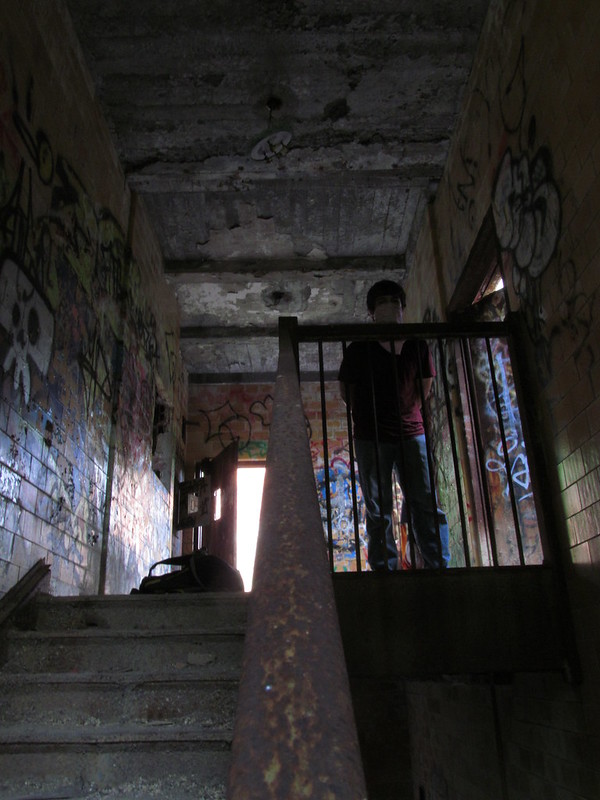
To me the Staten Island Farm Colony is like Kings Park scaled down to about 1/5 its size. The psychiatric wards and the asbestos filled basement are still present, only much smaller. My first brush with the SIFC was not a pleasant one. I had hopped on the bus with a contact on a dull rainy day, and after a slow ride, circumvented the entire fence searching for an opening. When we got in, I found the one building that we visited to be majorly underwhelming.

However, I knew that the campus was much larger. In other photos, some pretty amazing stuff crops up which I evidently overlooked. I decided to go back there and my perception was changed...what I originally thought was one of NYC's most boring explores actually turned out to be very cool. And seeing as it's about 70 acres, there's still much more to see...I will definitely be back.


Here you can see an entire floor has collapsed. Being the thrill-seeking loons that we are, we climbed around there.


The whole building is overgrown, almost to the point where the plants disguise it. It took a bit of monkeying to get up to the apex. Here, nature reclaims its rightful property.


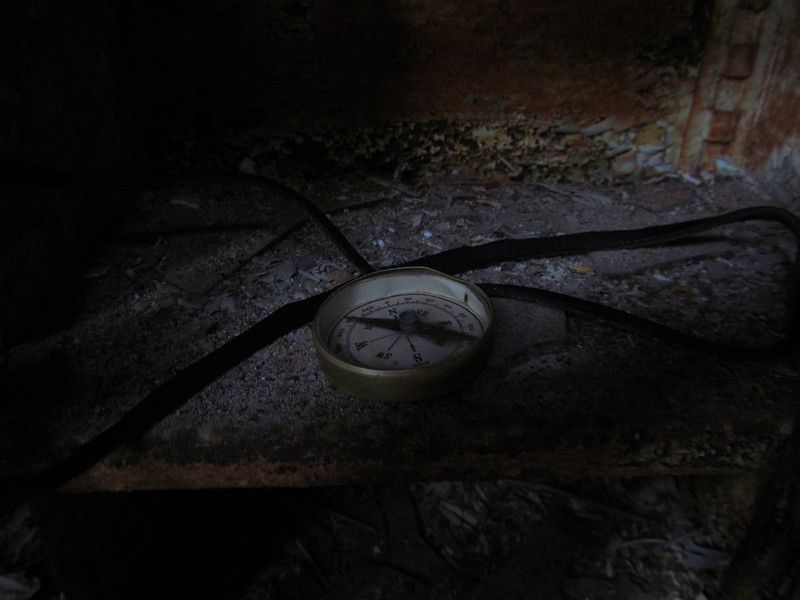
During summer 2012, I would constantly wear this compass around my neck. It was a great companion and accompanied me in many of my travels. This photo is representative of the death of the compass, the death of the season, and the death of an era: I lost the artifact at Fort Totten towards the end of the summer, after which my adventures became much more high risk than typical abandoned buildings, a time where I pushed my limits far further than I could have ever imagined.


We watched the sunset from one of the rooftops, upon which we also found an unsealed bottle of Vitamin Water. Though slightly warm, it was, curiously enough, still good to drink. Then, as we left for the bus we bought a roll and a quarter pound of cheese from a nearby deli, sitting on the street curb and ripping chunks off our homemade "ghetto sandwiches." Needles to say, it was a very good day.


Saturday, January 5, 2013

Sedgewick Avenue Station

     If you have read articles about abandoned stations in New York City, you have most likely gotten a laundry list of locations of Manhattan locations, with emphasis on how "spooky" or "creepy" the area is. I'm not going to disagree with that last part, as some of them can get pretty strange, but stations the outer boroughs, such as the Bronx, are for the most part ignored.
     Many many many moons ago, my soon-to-be contact went on an expedition to see if he could locate the abandoned Sedgewick Avenue station. The group went down to some nearby tracks  in hopes that by following them they would reach the station. Transit workers spotted them and they bolted, however, the direction they fled happened to lead them to, you guessed it, the abandoned station. I had heard about this and messaged the person, gaining a very useful contact. He led the way to the station during a sunny winter day, but I came back later in the summer to check out the area again. Here are the photographic results.
 

Interestingly, this is the only picture I took of the actual station. The remaining pictures explore the surrounding area.


Several blown up cars have been dumped here.